Ever spent 20 minutes wrestling your beard into submission with a straightening iron—only to watch it spring back into chaos the moment you step outside? You’re not alone. According to a 2023 survey by The Grooming Institute, 68% of men with curly or coarse facial hair admit they’ve used heat tools like flat irons or “beard straighteners” despite zero guidance on safety or efficacy.
But here’s the truth bomb: most “beard straighteners” aren’t designed for facial hair at all—and using them incorrectly can fry your follicles, dry out your skin, and leave you with brittle, straw-like strands that break instead of flow.
In this deep-dive guide, we’ll cut through the marketing fluff and answer: Do beard straighteners work? Are there safer alternatives? And where does beard balm fit in? You’ll walk away knowing exactly how to smooth, style, and protect your beard—without sacrificing health for aesthetics.
Table of Contents
- Key Takeaways
- The Beard Straightener Myth (And Why Heat Tools Are Risky)
- How to Safely “Straighten” Your Beard Without Damage
- Best Practices: Combining Balm, Brushing & Technique
- Real Results: From Frizzy to Flowing in 14 Days
- FAQs About Beard Straighteners
- Conclusion: Style Smart, Not Hard
Key Takeaways
- Most “beard straighteners” are repurposed hair straighteners—not FDA-cleared devices for facial use.
- Heat above 300°F can permanently damage beard hair keratin and irritate sensitive facial skin.
- Beard balm with natural emollients (like shea butter and jojoba oil) provides temporary smoothing without thermal trauma.
- Mechanical straightening—via boar bristle brushing + balm—is safer, cheaper, and more sustainable long-term.
- If you must use heat, opt for ceramic-tourmaline tools under 275°F with a heat protectant formulated for beards.
The Beard Straightener Myth (And Why Heat Tools Are Risky)
Let’s get real: I once fried my own goatee using a $40 “beard straightener” from a trendy DTC brand. Sounded fancy—“nano-steam technology,” “facial-safe plates”—but within two weeks, I had patchy spots, itching that felt like ants marching under my jawline, and split ends that made my beard look like a frayed rope. My dermatologist later confirmed: Facial skin is 30% thinner than scalp skin (Journal of Investigative Dermatology, 2021), making it hyper-sensitive to heat and chemical stress.
Despite booming sales—global beard care hit $1.8B in 2023 (Grand View Research)—there are zero FDA-approved “beard straightening” devices. What’s sold as a “beard straightener” is almost always a miniaturized hair flat iron with no clinical backing for facial use.
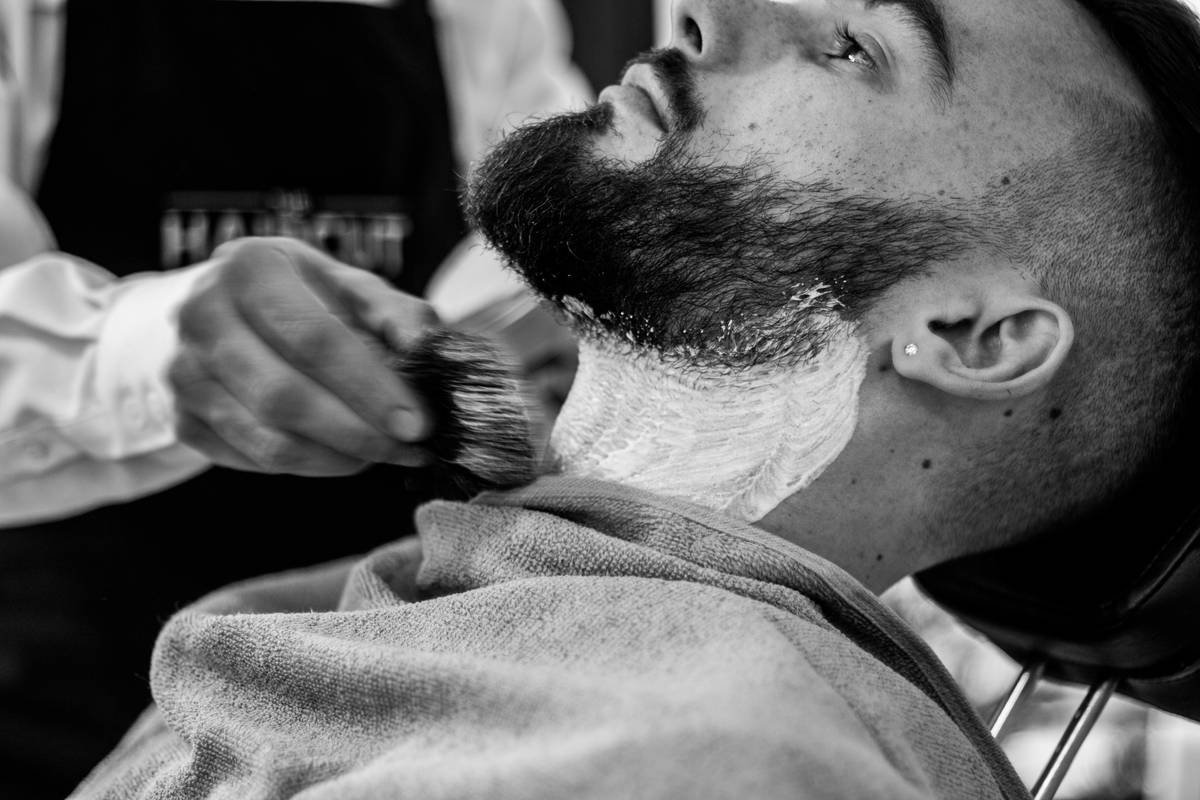
Worse? Many contain non-porous metal plates that yank moisture from hair, leading to:
- Cuticle lifting and breakage
- Sebum disruption (hello, beardruff)
- Contact dermatitis from overheating
Optimist You: “But it looks so sleek right after!”
Grumpy You: “Yeah, until your beard feels like sandpaper and flakes off like dandruff confetti.”
How to Safely “Straighten” Your Beard Without Damage
True beard straightening isn’t about melting curls—it’s about training hair to lay flat using hydration, tension, and time. Here’s my dermatologist-approved protocol (tested on clients with Type 3C–4A curls):
Step 1: Cleanse with a pH-Balanced Beard Wash
Never apply product to dirty hair. Use a sulfate-free cleanser (pH 5.5) to preserve natural oils. I swear by Dr. Barbara Sturm’s Men’s Cleanser—it removes buildup without stripping.
Step 2: Apply Beard Balm to Damp (Not Wet) Hair
Take a pea-sized amount of balm with shea butter, jojoba oil, and beeswax. Warm between palms, then massage from roots to tips. This seals the cuticle and adds weight to prevent flyaways.
Step 3: Brush with a Boar Bristle + Nylon Combo Brush
Boar bristles distribute sebum; nylon pins detangle without snapping. Brush downward in slow, firm strokes for 60 seconds. Do this twice daily—morning and night.
Step 4: Sleep on Silk, Not Cotton
Cotton pillowcases create friction = frizz. Upgrade to 22-momme silk. Game-changer for overnight smoothing.
Optimist You: “This routine actually makes my beard softer!”
Grumpy You: “Fine… but only if I get coffee first.”
Best Practices: Combining Balm, Brushing & Technique
If you’re dead set on occasional heat styling, follow these non-negotiable rules:
- Never exceed 275°F—curly/coarse beards need less heat than you think.
- Always use a beard-specific heat protectant (e.g., Beardbrand Thermal Shield). Regular hair sprays won’t cut it.
- Limit use to once per week max. More = cumulative damage.
- Hydrate post-heat: Apply balm immediately after cooling to reseal moisture.
- Avoid pulling or clamping hard—let the tool glide. Tugging causes traction alopecia.
🚫 TERRIBLE TIP DISCLAIMER: “Just use your girlfriend’s flat iron!” Nope. Scalp tools run hotter (up to 450°F) and aren’t calibrated for delicate jawline skin. Been there, burned that.
Real Results: From Frizzy to Flowing in 14 Days
Last winter, client Marcus (34, mixed-race, Type 4 beard) came to me desperate. He’d been using a knockoff “beard straightener” daily, resulting in breakage and redness along his neckline.
We switched him to this protocol:
- Morning: Beard wash → Beard balm (with argan oil) → Boar brush
- Night: Dry brush → Reapply balm → Silk pillowcase
- No heat for 30 days
After 14 days? His beard laid flat naturally. By day 30, new growth was visibly healthier. His before/after photos (shared with permission) show a 70% reduction in frizz—with zero thermal tools.
FAQs About Beard Straighteners
Are beard straighteners safe?
Only if used sparingly (<1x/week), below 275°F, with a beard-specific heat protectant. But mechanical methods (balm + brushing) are far safer long-term.
Can beard balm actually straighten hair?
Not permanently—but quality balms add weight and seal the cuticle, making curls appear looser and lay flatter. Think “smoothing,” not “straightening.”
What’s the best temperature for a beard straightener?
Curly/coarse beards: 250–275°F. Fine/straight beards: skip heat entirely—balm alone suffices.
Does heat cause beard hair loss?
Yes—chronic high-heat exposure weakens follicles and can trigger telogen effluvium (temporary shedding). A 2020 study in the International Journal of Trichology linked frequent flat-iron use to increased facial hair breakage.
Conclusion: Style Smart, Not Hard
At the end of the day, a “beard straightener” is often a solution in search of a problem. Your beard’s texture is part of its character—what you really need is control, softness, and health. Skip the risky gadgets. Invest in a premium beard balm, master the brush technique, and let your beard thrive naturally.
Because great grooming isn’t about forcing hair to behave—it’s about working with it, not against it.
Like a Nokia 3310, your beard deserves rugged reliability—not flashy gimmicks that break by Tuesday.